Showing posts with label landscape. Show all posts
Showing posts with label landscape. Show all posts
Thursday, March 6, 2014
How to Garden and Landscape With Xeriscape Plants

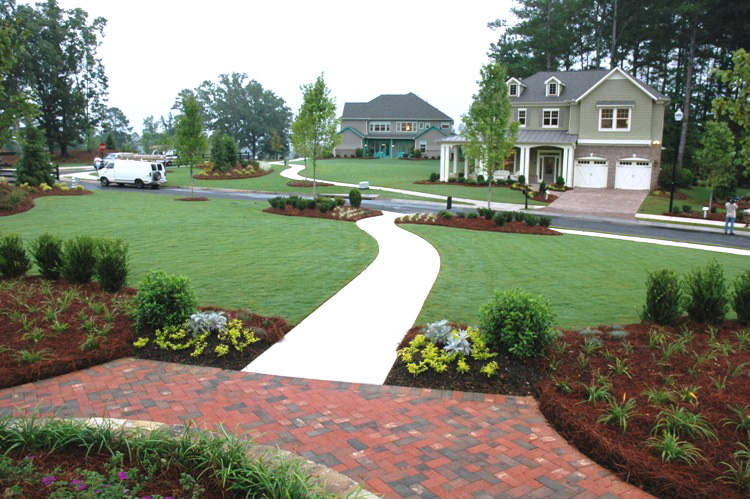
Xeriscape translates to dry Landscape. That is somewhat deceiving as it is not about dry landscaping, but efficient gardening. When we use proper techniques to Landscape and garden, we actually save money, time, energy and water over the life of the garden.
The basic principles of Xeriscaping are:
Planning Soil preparation Reducing turf areas Plant selection Proper irrigation Mulching
In planning, group Plants according to their water and lighting needs. Place taller Plants in back areas with the shorter growers in the front. It is better to water Plants infrequently, yet deeper than to water lightly and often.
Plant varieties that are low maintenance and will work within a Xeric Landscape are herbs such as lavender, sage, rosemary, thyme, chives and oregano as well as other perennials like yarrow, Russian sage, salvia, daylilies, ameria, gaillardia, veronica, sedum, aster, phlox, and echinacea. Shrubs such as junipers, spiraea, lilacs, honeysuckle, hibiscus, caragana, cypress, barberry, nandina Firepower, boxwood, viburnum, and mock orange. Trees to look for are green ash, Grace smoketree, Japanese red maples, magnolias, river birch, oaks, flowering cherries and tulip poplar. Ornamental grasses do work well in this environment, although they will require regular watering during their first year after planting so that the root system does not dry out. After establishing their root system, they become almost drought tolerant.
Mulch should be applied in late spring to early summer to help keep the ground cool and moist. Good choices for mulch are shredded bark mulch, pine needles, straw, aged compost, and aged manure mix. Use pine needles with caution as mold can build up underneath when used in shaded areas. Using rocks as mulch, including lava stones, should be reserved for less sunny, shadier areas as the rocks absorb heat during the day and release it during the evening/cooler periods, which in summer often kill the Plants.
For a great selection of Xeriscape Plants, visit Greenwood Nursery
Cheryl D. Jones, co-owner of Greenwood Nursery, McMinnville, TN, shares tips and information on gardening and landscaping through her blog, newsletters and nursery website.
Article Source: http://EzineArticles.com/?expert=Cheryl_D._Jones

Monday, March 3, 2014
Understanding The Six Facts About Landscape Design

Landscape design is all about designing landscape plans and deciding how to implement the design plans that one comes up with
The person who plans a garden or landscape is a landscape designer. Landscape designers sit down and map out everything in a step by step fashion and decide which things need to be done in order to make the design plan a reality. A cohesive landscape design results from a good plan. They may ask for instructions from the owner of the property, make sketches or photographs, or even use drafting tools. The property will also need to be measured off to ensure adequate materials and tools for the job. Landscape designers then implement the plan by applying their technical expertise. The landscape plan and execution will include components from the fields of aesthetics, horticulture and design.
Collaborating with other disciplines may be on the card
Landscape design may involve the overlapping of various talents and technical expertise as the project evolves from the planning phase to the actual site construction. Landscape designers may collaborate with other technicians from disciplines like civil engineering, botany, horticulture, craftsmanship, surveying and others. They may integrate technologies like computer software as well to help them plan very accurately and efficiently.
It combines nature and culture
Various cultural features with naturals elements are combined in landscape design. Landscape designers will make decisions about modifying the landscape, replacing it, and which natural features should be retained or changed. These professionals will also work closely with their clients in order to come up with a cohesive design plan that harmonizes nature and culture, as well as the clients own preferences and needs.
This is not landscape architecture
Though the two overlap in many ways, there are still some major differences between landscape design and landscape architecture. Explaining simply, landscape architecture is always considered broader in scope when matched to landscape design. Engineering aspects like integrating drainage and irrigation systems, soil climate and other engineering works are included in addition to designing in landscape architecture. A professional license for practice, is typically required for landscape architects also.
Different factors are considered carefully
Objective factors like the locations climate and microclimate, drainage system, topography, surrounding infrastructures and facilities, lighting system, natural plants present in the area and any other measurable factors in addition to artistic elements are considered for landscape design.
It may be learned from educational institutions
Only through apprenticeship the past landscape designers were trained. It was not until the early 1900s that the first institutional education for landscape design was introduced. Over the years, the program became available at many levels. Certain universities have their own departments devoted to landscape design as well and provide relevant minor programs such as landscape engineering, landscape design history, fine arts, natural resources, horticultural botany and several others.
Landscape design is living proof that lofty ideals and practical safekeeping of our environment can go together very well.
http://blogspot.com/
Subscribe to:
Posts (Atom)